
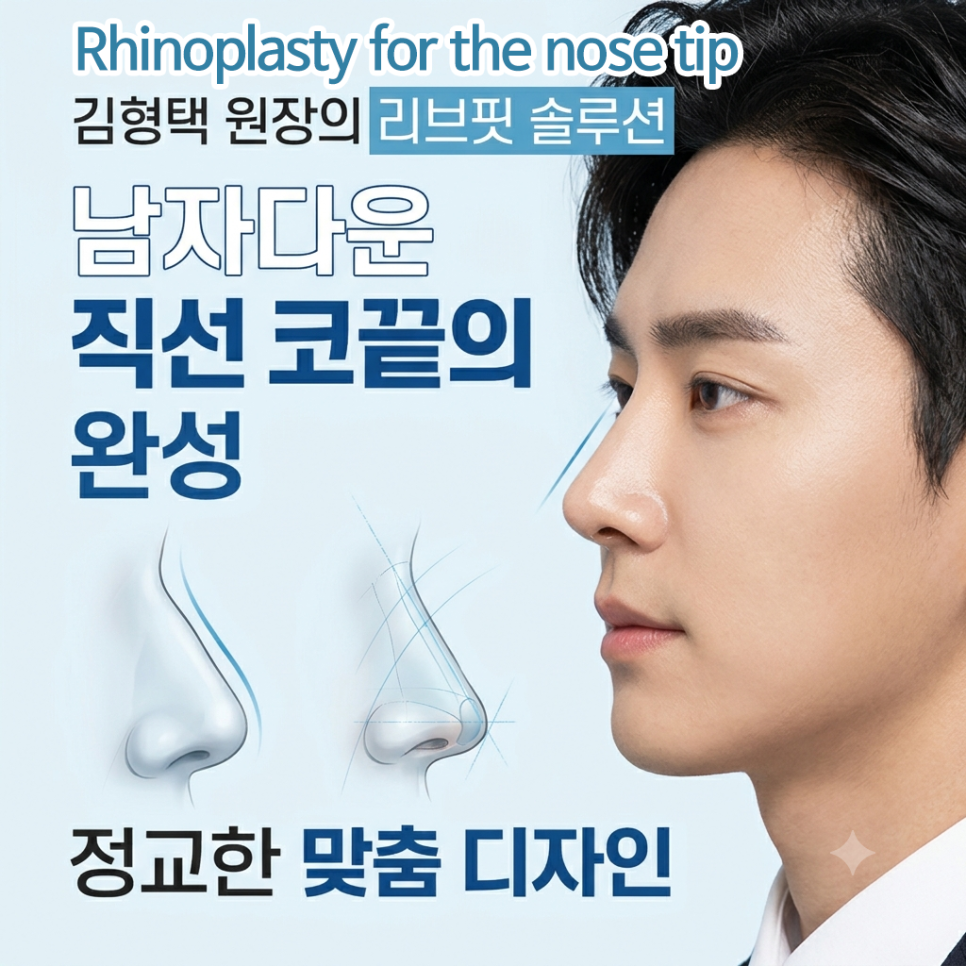
Hello, I am Dr. Hyung-taek Kim, director of KOWON Plastic Surgery.
The patient in this case had a slightly drooping nasal tip, giving the nose a heavy appearance from both the front and the side.
The area between the eyebrows was also slightly low, making the starting point of the nasal bridge look particularly flat.
When the overall balance is affected in this way, simply lifting the nasal tip or adding height to one part of the nasal bridge may not achieve the desired improvement.
The line extending from between the eyebrows to the nasal tip needs to be considered as a whole.
We first repositioned and sutured the cartilage to lift the drooping area and redirect the nasal tip upward.
We also created a firm supporting framework to help resist drooping over time.
For a downward-drooping nasal tip, a well-constructed supporting framework is important for maintaining a defined shape after surgery.
We used RIBFIT™ to create a smooth transition in height from between the eyebrows along the nasal bridge, carefully refining the line to suit the overall facial proportions.
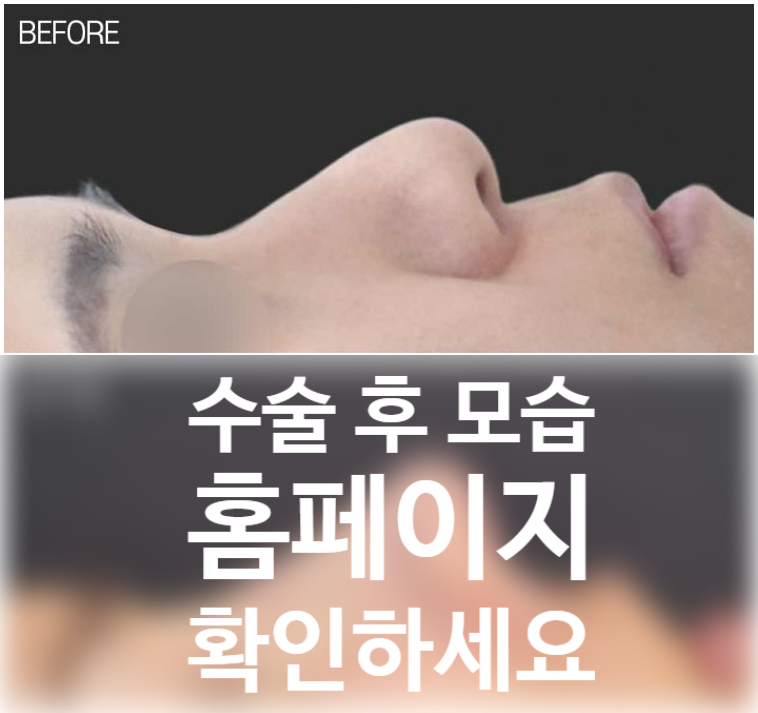
Conventional implants have some limitations when it comes to finely adjusting the height around the glabella. RIBFIT™ can be custom-made using autologous rib cartilage, allowing the nasal bridge line from the glabella onward to be shaped to suit the patient's bone structure.
The material fits closely against the internal skin tissue and sits stably. Because it uses the patient's own tissue, it can also help ease concerns about a foreign-body sensation or inflammation.
People who are hesitant about artificial implants often first consider dermis, rib cartilage particles, or implant-free methods when exploring options that use their own tissue.
However, some tissue may be absorbed as it integrates, and the extent is difficult to predict. The area may therefore appear somewhat fuller at first.
RIBFIT™ uses autologous tissue firmly compressed in a dedicated mold to create a more defined, smoother nasal bridge contour.
By addressing the unpredictable absorption associated with conventional autologous tissue, this approach aims to maintain a defined nasal bridge line, similar to the contour achieved with silicone, while keeping the shape consistent over time.
The defined line can be seen in this case.
We also carefully assessed the angle between the columella and the philtrum so that the nasal tip would not look overly upturned. This contributed to a lighter, more refined appearance in this patient.
[Related Cases]
A related case involved a slight dorsal hump and a broad, blunt nasal tip with a typical bulbous tip structure.
The uneven nasal bridge and heavy nasal tip made the face appear less defined and less three-dimensional overall.
During surgery, we carefully performed an osteotomy and refined the uneven dorsal hump to smooth the nasal bridge line.
We then repositioned and sutured the splayed cartilage to bring the broad nasal tip into a narrower, more defined shape.
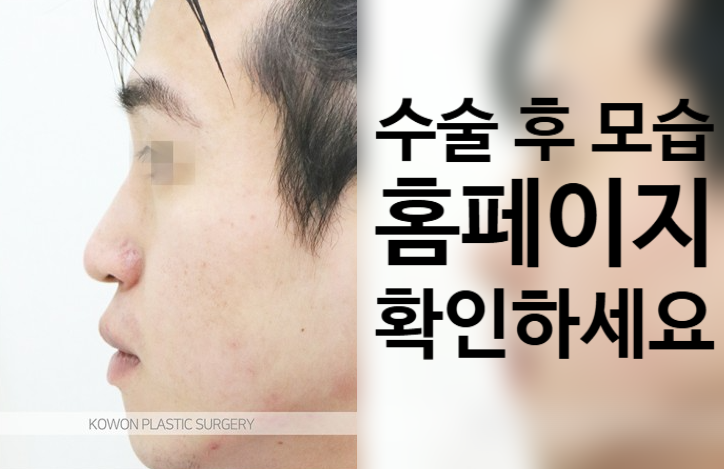
In this case, the blunt nasal tip and uneven nasal bridge became more naturally connected, forming a cleaner, more refined straight line.
The overall facial features appeared more balanced, with a neater, more refined impression.
If you have similar concerns about your nasal bridge or male nasal tip surgery, this case may be a useful reference. A consultation at KOWON Plastic Surgery can help clarify what changes may suit your own bone structure.
[Advice from the Director]
Rhinoplasty should not simply copy someone else's nasal line. It is important to assess each person's skin thickness, bone structure, and cartilage strength and develop a plan suited to those features.
For men in particular, the proportions of the nasal bridge and nasal tip should be balanced while preserving the characteristics of the overall facial structure.
"Designs and materials should be chosen to suit your facial proportions and bone structure, with the aim of achieving stable results over time."

Rather than focusing only on immediate changes, I work to improve the quality of the procedure through a detailed surgical plan tailored to each individual's anatomy.
If a dorsal hump or blunt nasal tip bothers you whenever you look in the mirror and has led you to consider male nasal tip surgery, a detailed assessment can be a useful first step.
This was Dr. Hyung-taek Kim of KOWON Plastic Surgery.
KOWON Plastic Surgery Clinic
2nd Floor, KBL Center, 110 Dosan-daero Gangnam-gu, Seoul
This procedure/surgery may cause side effects such as bleeding, infection, swelling, and asymmetry depending on the individual. Please consult with medical staff for accurate information before making a decision.
— Dr. Hyung-taek Kim, KOWON Plastic Surgery